

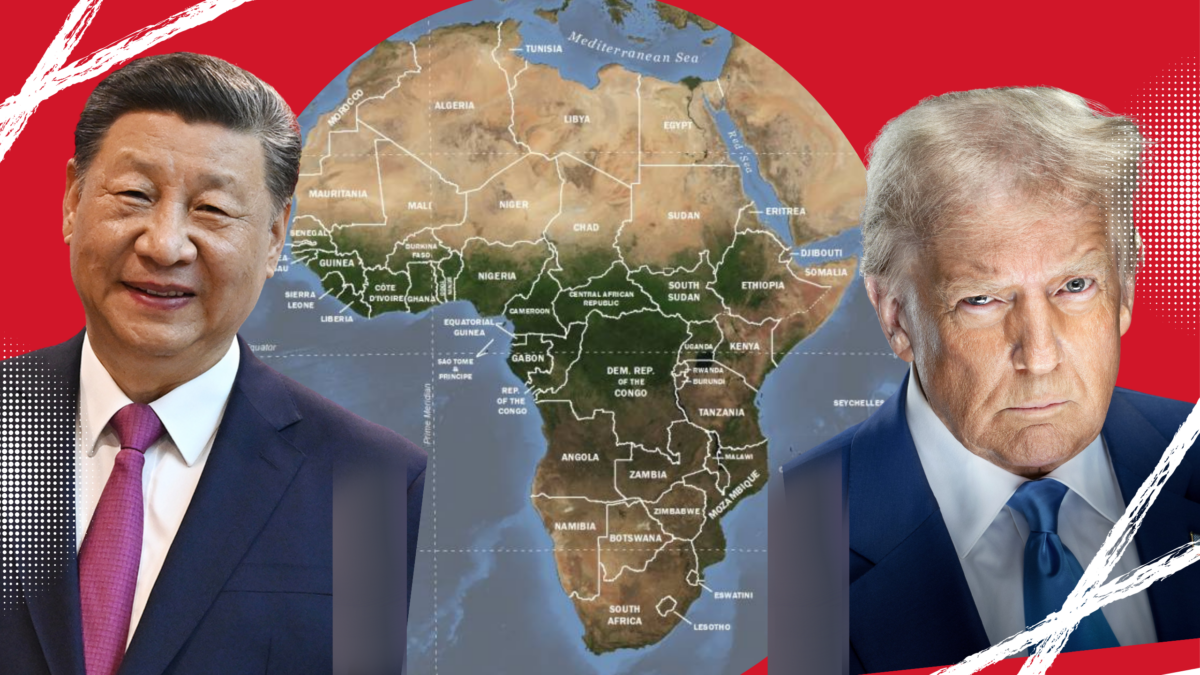
The global economy, already navigating the uncertain waters of inflation, supply chain disruptions, and geopolitical tensions, has now been jolted by the renewed tariff war between the United States and China. In March 2025, President Donald Trump announced a fresh wave of tariffs on Chinese imports, citing unfair trade practices, intellectual property theft, and China’s continued rise as an economic threat to U.S. dominance. In retaliation, China imposed new duties on American agricultural products, machinery, and technology exports. The result has been a dramatic escalation of trade hostilities between the world’s two largest economies—an event that reverberates far beyond their borders.
Africa, often perceived as a bystander in global economic conflicts, finds itself deeply entangled in the consequences of this economic duel. With most African economies heavily reliant on trade, commodity exports, and foreign investment, the tariff war presents both formidable risks and surprising opportunities. Understanding how this trade battle impacts Africa, and how the continent should strategically respond, is critical for shaping a resilient, self-sustaining, and prosperous African economic future.
The first and most immediate impact of the tariff war is the disruption of global trade flows. As tariffs raise the cost of imports and exports between the U.S. and China, global supply chains are being redirected. African countries that rely on Chinese imports—ranging from construction materials and electronics to agricultural inputs—now face increased costs and possible shortages. On the other hand, exports to China, including minerals, oil, and raw agricultural products, could decline as Chinese demand wanes due to retaliatory U.S. policies and internal inflationary pressures.
African nations with economies closely linked to either China or the U.S. will feel the squeeze. For example, Nigeria, one of Africa’s largest economies, imports a significant volume of machinery, pharmaceuticals, and electronics from China. Tariff-induced price hikes on Chinese exports mean that Nigerian businesses and consumers will have to pay more, which could lead to inflationary pressure and economic contraction. Similarly, countries like Kenya and Ethiopia, with major infrastructure projects funded by Chinese firms, may see delays and cost overruns due to complications in Chinese supply chains.
Beyond trade, commodity-dependent African economies face another challenge: price volatility. The uncertainty triggered by the tariff war leads to global risk aversion, with investors shifting away from volatile markets. This shift affects the prices of oil, copper, cobalt, cocoa, and other commodities that form the backbone of many African economies. A dip in demand from industrial powerhouses like China could significantly reduce Africa’s export revenues. Given that many African governments depend heavily on resource exports to fund national budgets, the ripple effects could destabilize public services, increase debt burdens, and shrink social investment.
In addition to trade and commodities, the tariff war is influencing patterns of foreign direct investment. As tensions between the U.S. and China intensify, companies are reevaluating their global operations. There’s a growing interest in diversifying manufacturing bases outside Asia to minimize exposure to U.S.-China hostilities. This dynamic offers Africa a rare strategic opportunity. With a growing young population, expanding urban centers, and increasing digital connectivity, Africa could position itself as an alternative manufacturing and innovation hub. Already, countries like Rwanda, Ghana, and Morocco are attracting global firms looking for stable, cost-effective, and strategically located bases.
However, this opportunity will not materialize without deliberate effort. Africa must urgently address the structural issues that hinder its global competitiveness. Infrastructure deficits, inconsistent regulatory frameworks, corruption, and limited access to electricity remain significant barriers to industrialization and foreign investment. The tariff war may create a window for Africa, but seizing it requires strategic vision, policy coherence, and regional cooperation.
At a geopolitical level, the tariff war is also shaping global alliances and soft power dynamics. As the U.S. under Trump adopts a more unilateral, transactional approach to global engagement, China is doubling down on its Belt and Road Initiative and South-South cooperation rhetoric. Africa finds itself caught in the crosshairs of this strategic competition. Many African countries are already deeply indebted to China through infrastructure loans and development finance. At the same time, the U.S. remains a vital partner in security, health, and democracy support. This rivalry places pressure on African leaders to choose sides or maintain a precarious balancing act.
Rather than being passive participants, African nations must assert their agency. One critical response should be the strengthening of intra-African trade. The African Continental Free Trade Area (AfCFTA), launched in 2021, presents a transformative platform to enhance regional trade, industrial integration, and collective economic resilience. By reducing dependence on global powers for goods and trade partnerships, Africa can cushion itself from external shocks like the U.S.-China trade war.

To operationalize the AfCFTA effectively, member states must invest in cross-border infrastructure, harmonize customs procedures, and eliminate non-tariff barriers that frustrate intra-African commerce. The development of regional value chains, especially in agro-processing, textiles, and automobile assembly, can unlock economies of scale and reduce vulnerability to global disruptions.
At the national level, governments must prioritize policy reforms that make Africa more attractive for investment and entrepreneurship. This includes improving ease of doing business, ensuring political stability, strengthening property rights, and providing fiscal incentives for investors in critical sectors like manufacturing, logistics, and renewable energy. Reducing red tape, digitizing public services, and supporting startups can unleash a wave of innovation that positions African economies for sustained growth.
Equally important is investing in human capital. Africa’s demographic dividend—over 60% of the population is under 25—can become a powerful economic engine if the youth are equipped with skills for the future. Technical education, vocational training, and digital literacy programs must become national priorities. A skilled and adaptable workforce will not only meet the demands of new industries but also attract high-quality investments seeking talent-rich destinations.
To minimize the adverse effects of commodity price shocks, African economies must embrace value addition and economic diversification. Rather than exporting raw cocoa, Africa should lead in chocolate production. Instead of shipping raw lithium, the continent should manufacture batteries. Policies that encourage local processing, protect intellectual property, and support industrial clusters can increase export earnings, create jobs, and reduce poverty.
Financial institutions and development agencies also have a role to play. They must support local entrepreneurs and SMEs with affordable credit, business development services, and market access. Special economic zones and public-private partnerships can be used to pilot industrial policies that attract technology transfer and foster inclusive economic growth.
In the diplomatic arena, African leaders should collectively engage global powers with a unified voice. Through platforms like the African Union and regional economic communities, Africa can advocate for fair trade rules, climate justice, and balanced global governance reforms. Africa’s market of over 1.4 billion people is an asset that must be leveraged strategically in negotiations.
Furthermore, civil society, academic institutions, and think tanks such as IFREME must play a proactive role in promoting free market principles, economic education, and accountable governance. A vibrant intellectual ecosystem is essential to challenge outdated policies and champion reforms that align with Africa’s long-term interests.
In conclusion, the 2025 U.S.-China tariff war under President Donald Trump is not a distant dispute—it is a seismic event reshaping global trade and economic power. Africa must not be caught off guard or relegated to the sidelines. While the crisis brings risks, it also provides Africa a rare opportunity to pivot toward resilience, self-reliance, and global relevance.
The task ahead is clear: diversify trade relationships, deepen regional integration, invest in infrastructure and human capital, create a conducive investment climate, and pursue value addition with vigor. Africa must rise not as a pawn in a global chessboard but as a strategic player, charting its own economic destiny through bold reforms, visionary leadership, and continental solidarity.
By harnessing the principles of economic freedom, entrepreneurship, and innovation, Africa can turn global uncertainty into continental opportunity—and build a future where its people prosper, not despite global tensions, but because of its strategic response to them.
By IFREME (Institute for Free Market and Entrepreneurship)