
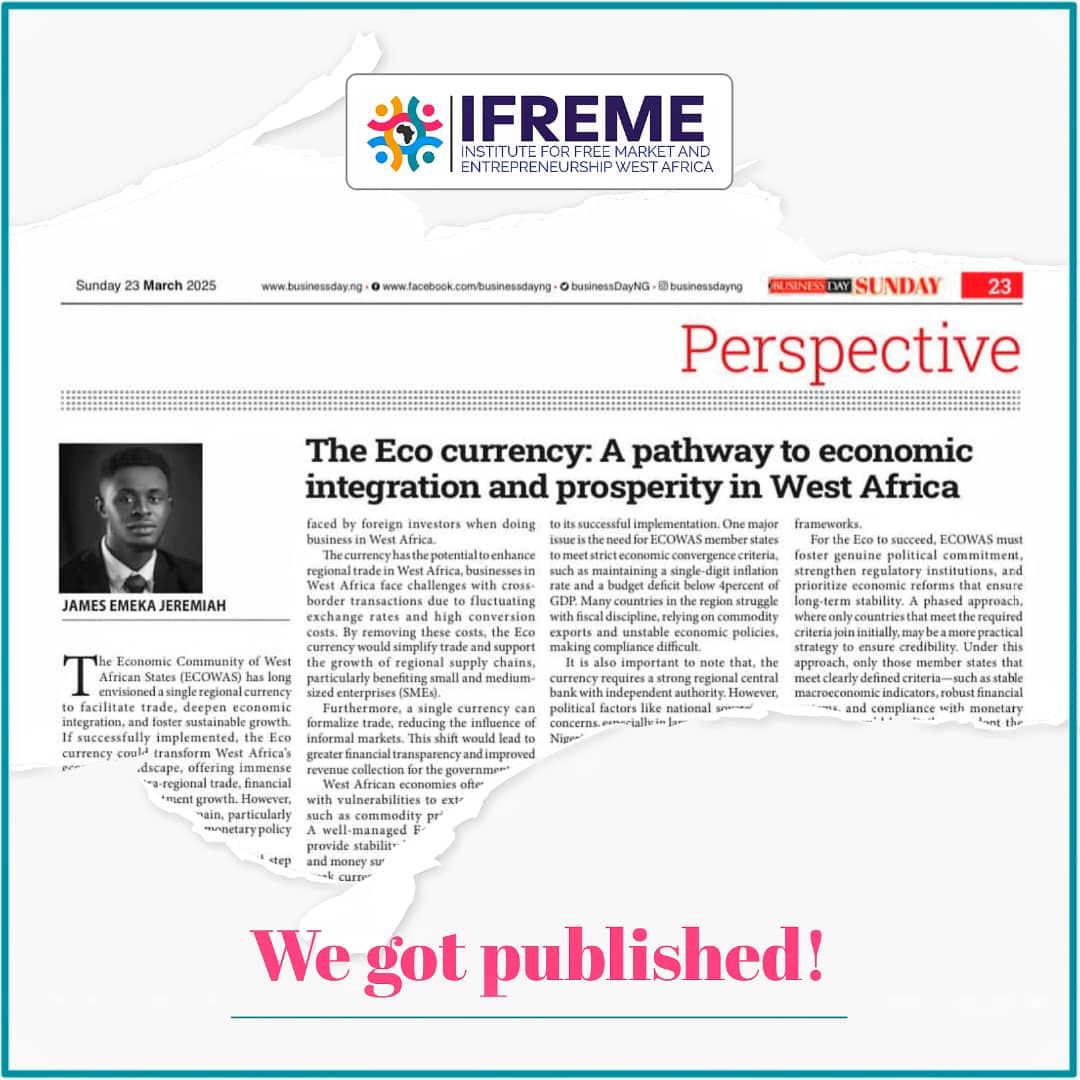
The Economic Community of West African States (ECOWAS) has long envisioned a single regional currency to facilitate trade, deepen economic integration, and foster sustainable growth. If successfully implemented, the Eco could transform West Africa’s economic landscape, offering immense potential for intra-regional trade, financial stability, and investment growth. However, significant challenges remain, particularly regarding fiscal discipline, monetary policy coordination, and political will.
A common currency is a crucial step toward economic integration in West Africa, a region with a combined population of over 400 million and an economy worth billions of dollars. Currently, ECOWAS member states use multiple currencies. The fragmentation of currencies has led to high transaction costs, exchange rate fluctuations, and difficulties in cross-border trade.
The introduction of the Eco currency aims to among other things: boost trade and economic integration in the region, enhance financial stability by reducing currency volatility, strengthen ECOWAS’s economic influence in global trade and financial markets, and encourage foreign direct investment (FDI). A single, stable currency could solve problems of exchange rate uncertainties and regulatory complexities faced by foreign investors when doing business in West Africa.
The currency has the potential to enhance regional trade in West Africa, businesses in West Africa face challenges with cross-border transactions due to fluctuating exchange rates and high conversion costs. By removing these costs, the Eco currency would simplify trade and support the growth of regional supply chains, particularly benefiting small and medium-sized enterprises (SMEs).
Furthermore, a single currency can formalize trade, reducing the influence of informal markets. This shift would lead to greater financial transparency and improved revenue collection for the government.
West African economies often struggle with vulnerabilities to external shocks, such as commodity price fluctuations. A well-managed Eco currency could provide stability by controlling inflation and money supply growth. Countries with weak currencies would find a more stable monetary environment, helping to avoid hyperinflation and fiscal issues. Investment could also improve, as the Eco currency would reduce currency risk for foreign investors. A unified monetary system would facilitate easier access to credit and banking services across borders.
Lastly, the Eco currency could strengthen ECOWAS as an economic bloc, allowing for better trade negotiations and attracting international partnerships. With a single currency, countries could engage easily with global financial institutions, and West Africa could enhance its competitiveness as a manufacturing and service hub.
The Eco currency offers significant potential benefits but faces several challenges to its successful implementation. One major issue is the need for ECOWAS member states to meet strict economic convergence criteria, such as maintaining a single-digit inflation rate and a budget deficit below 4% of GDP. Many countries in the region struggle with fiscal discipline, relying on commodity exports and unstable economic policies, making compliance difficult.
It is also important to note that, the currency requires a strong regional central bank with independent authority. However, political factors like national sovereignty concerns, especially in larger economies like Nigeria, may hinder adoption. The success of the Eco depends on the commitment and political will of all member states.
Public confidence is also crucial, particularly in countries with established national currencies like Ghana and Nigeria. Citizens may be reluctant to switch to a new currency without assurances of stability. Public awareness and effective monetary management will be key to building this trust.
Finally, West Africa’s ongoing security and governance issues, including political instability and corruption, pose risks to the Eco’s integrity. Establishing transparent governance and regulatory frameworks will be essential for the currency’s long-term success.
In conclusion, The Eco as a currency represents a bold step toward economic integration and prosperity in West Africa. It could revolutionize trade, strengthen financial stability, and enhance the region’s economic influence. However, the road to a successful currency union is fraught with challenges, including meeting economic convergence criteria, addressing governance concerns, and ensuring strong institutional frameworks.
For the Eco to succeed, ECOWAS must foster genuine political commitment, strengthen regulatory institutions, and prioritize economic reforms that ensure long-term stability. A phased approach, where only countries that meet the required criteria join initially, may be a more practical strategy to ensure credibility. Under this approach, only those member states that meet clearly defined criteria—such as stable macroeconomic indicators, robust financial systems, and compliance with monetary policies—would be eligible to adopt the currency initially. This would help establish credibility and confidence in the Eco, laying a solid foundation for future expansions.
As West Africa approaches 2027, policymakers must engage businesses, financial institutions, and the public to build confidence in the Eco. A well-implemented regional currency could be a game-changer for West Africa, unlocking unprecedented economic opportunities and positioning the region for sustainable growth in the global economy.
The Institute for Free Market and Entrepreneurship West Africa remains committed to supporting initiatives that foster free market principles, economic freedom, and entrepreneurship in Africa. The successful adoption of the Eco could mark a historic turning point in the pursuit of regional prosperity.
Written By James Emeka Jeremiah
James Emeka Jeremiah writes from Ibadan Nigeria, he is the Communications officer for the Institute of Free Market and Entrepreneurship West Africa.
08100317388